


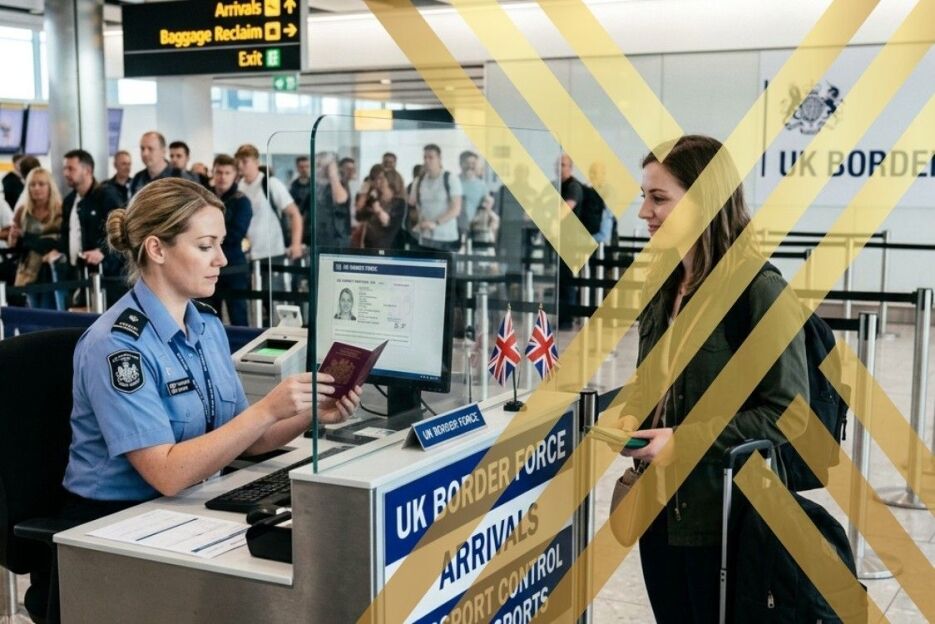
If you are a national of Afghanistan, Cameroon, Myanmar or Sudan, or you sponsor people from those countries, the UK visa brake may decide whether your application can succeed. The policy was introduced by the UK government in March 2026 and changes how certain visa applications made from outside the UK are handled.
At Axis Solicitors, our immigration team regularly advises clients on sudden changes to the immigration rules, including the visa brake. This guide explains what the policy is, which routes and nationalities it covers, and what you can realistically do next.
For wider context on UK immigration support, our main service page sets out the routes we cover.
What Is the UK Visa Brake?
The UK visa brake is an emergency immigration restriction that came into force by UK government on 26 March 2026. It requires refusal of specified visa applications from certain nationalities, and the Home Secretary has the power to change which countries and routes are covered.
The House of Commons Library describes it as a temporary ban on certain visa applications made from abroad for nationals of four countries: Afghanistan, Cameroon, Myanmar and Sudan. In plain terms, the visa brake applies where the government considers that too many people who arrive on a particular visa route go on to claim asylum.
Where the Visa Brake Applies
The visa brake only affects entry clearance applications made from outside the UK. Entry clearance means permission to travel to the UK, granted before you arrive.
People who are already in the UK with valid permission are not directly affected by the restriction.
Why the UK Government Introduced the Visa Brake
The Home Office introduced the visa brake in response to a pattern of people entering on legal visa routes and later claiming asylum. Official figures cited at announcement stated that asylum applications by students from Afghanistan, Cameroon, Myanmar and Sudan had risen to over 470% of their 2021 level by the year ending September 2025.
The government also pointed out that the number of Afghans on work visas claiming asylum was outstripping the number of visas issued. The aim is to reduce pressure on the asylum system and to strengthen public confidence in the immigration system.
What the Visa Brake Does Not Affect
The visa brake does not cancel visas that have already been granted. If you hold valid UK immigration permission, you can continue to rely on it until it expires.
It also does not stop in-country applications, such as extensions or switching into another route from within the UK, where you are eligible and meet the usual requirements.
Key Dates and Application Cut-Off
The visa brake does not apply to applications made before 12:01am on 26 March 2026. Parliament was told that the brake will not apply to applications made before 26 March.
Applications submitted online on or after that time, within the affected routes and for the listed nationalities, are refused automatically. In practical terms, the date and time of submission decide whether the brake applies.
Who the Visa Brake Applies To
The visa brake applies to nationals of Afghanistan, Cameroon, Myanmar and Sudan, but only on the specific routes listed below. It does not apply to all UK visas, all visa routes or all countries.
Is the Visa Brake Permanent?
No. The government has said the brake is not intended to be permanent and will be regularly reviewed. The official impact assessment describes refusal of the relevant out-of-country applications for an initial 18-month period, after which the brake will be reviewed and may be extended or released.
The government has also indicated that other nationalities could be added if similar patterns emerge, so it is sensible to check GOV.UK for the current position before you apply.
Which Immigration Routes and Nationals the Visa Brake Affects
The visa brake is targeted. It covers two affected visa routes and a short list of nationalities, so understanding both parts is essential for applicants and sponsors.
Affected Immigration Routes
The visa brake currently affects two routes:
-
Student visa: Student visa applications made outside the UK by main applicants who are nationals of Afghanistan, Cameroon, Myanmar or Sudan are refused. The rule requires refusal even where the application is otherwise complete.
-
Skilled Worker visa: Skilled Worker visa applications made outside the UK are refused only where the main applicant is a national of Afghanistan.
The table below sets out the position at a glance.
| Route | Nationals affected | Where the application is made |
|---|---|---|
| Student visa | Afghanistan, Cameroon, Myanmar, Sudan | Outside the UK (entry clearance) |
| Skilled Worker visa | Afghanistan only | Outside the UK (entry clearance) |
| All other visa routes | Not covered by the brake | Not applicable |
Affected Nationalities
The visa brake applies to the affected nationalities of Afghanistan, Cameroon, Myanmar and Sudan. For the Skilled Worker route, only Afghan nationals are caught, so the relevant visa route and the nationality must both match.
The test is based on the main nationality declared on the application form. If you hold more than one nationality, check the current guidance carefully and take advice before you apply.
Implications for Sponsors and Universities
The brake applies to the main applicant, so sponsors should verify the nationality of anyone they plan to sponsor from overseas. A valid Confirmation of Acceptance for Studies (CAS) or valid Certificate of Sponsorship (CoS) will not prevent a refusal. KPMG notes that refusals apply even where a CoS/CAS had already been issued.
-
Universities: review admissions risk for applicants from the four listed countries before issuing a CAS for overseas applications, and tell international students about the position early.
-
Employers: a managing director or HR lead should consider recruitment pipelines involving Afghan nationals who are outside the UK, and plan for alternatives. A valid CoS alone will not protect the application.
-
Communication: tell affected individuals early, so they are not caught out by an avoidable refusal.
Our guide to Skilled Worker visa rule changes explains the wider sponsorship and salary framework if you are planning recruitment.
How the Visa Brake Affects Student Visas and Other Visa Routes

The visa brake has practical consequences that differ depending on where you are and which route you use. Knowing the difference helps you plan and avoid an unnecessary refusal.
Impact on Student Visa Applications
If you are a national of Afghanistan, Cameroon, Myanmar or Sudan applying for a Student visa from outside the UK, your application will be refused. This applies even if you hold a valid CAS from a licensed university, and many students will have concerns about deposits and course start dates.
-
Existing visas: the visa brake does not cancel a Student visa you already hold, so you can continue your studies under its conditions.
-
Earlier applications: applications submitted before 12:01am on 26 March 2026 are not affected.
-
Switching: if you are already in the UK, you may be able to switch to another visa route or extend your stay, provided you are eligible under that route.
-
Breaks in study: a Student visa can be curtailed (shortened) if you take a break from studying without your institution’s approval, so current students must consider any study changes carefully and keep to sponsor attendance requirements.
If you are in the UK on a Student visa and considering your next step, our guide on moving from a Student visa to a Skilled Worker visa explains how in-country switching normally works.
Effect on Skilled Worker Visa Applications
The visa brake affects Skilled Worker visa applications only for Afghan nationals applying from outside the UK. The key points are:
-
A valid CoS issued by an employer does not guarantee success if the main applicant is an Afghan national applying from abroad.
-
Applications submitted on or after 26 March 2026 are refused automatically where the nationality and route match.
-
Afghan nationals already working in the UK on a valid Skilled Worker visa can continue under their existing conditions. Unpaid leave of more than 30 days could lead to curtailment, so check the rules before agreeing any extended absence.
For a comparison of sponsored work routes, see our guide to the Skilled Worker visa and Senior or Specialist Worker visa.
In-Country Extensions and Switching Routes
The visa brake restricts overseas entry clearance. It does not prevent in-country extensions or switching routes where the immigration rules allow it.
-
Extensions: available where the rules for your current route permit them.
-
Switching: possible if you meet the requirements of the new route at the time you apply.
-
Continuing: lawful work or study can continue under your existing permission.
Timeline, UK Government Notices and March 2026 Implementation
The visa brake followed a short timeline, from announcement to implementation in under four weeks. Knowing the dates helps you work out whether an application falls inside or outside the policy.
Announcement and Statement of Changes
The UK government announced the visa brake on 4 March 2026. The Home Office then published the Statement of Changes to the Immigration Rules (HC 1691) on 5 March 2026. A Statement of Changes is the formal document that amends the Immigration Rules, which are the rules the Home Office applies to visa applications.
-
The affected routes are the Student visa and the Skilled Worker visa.
-
The listed countries are Afghanistan, Cameroon, Myanmar and Sudan, with Skilled Worker limited to Afghanistan.
-
Only entry clearance applications made from outside the UK are covered.
Implementation Date
The visa brake came into force at 12:01am on 26 March 2026. From that point:
-
Applications submitted online for the affected routes and nationalities are refused automatically.
-
Applications submitted before the cut-off are unaffected.
-
People already in the UK on a valid visa can continue to rely on their permission until it expires.
Official Guidance and Updates
The UK government publishes updates on GOV.UK, and applicants and sponsors should check it before relying on any summary, including this one. Watch for changes to the affected routes, the list of nationalities, and the review of the brake after the initial period.
Practical Steps for Individuals Affected by the Visa Brake
If the visa brake affects you, the right next step depends on whether you are inside or outside the UK. The restriction applies to overseas applications, so your options may differ if you are already here lawfully.
Check Alternative In-Country Visa Routes
If you are already in the UK, you may still be able to apply for an extension or switch routes. This depends on your current permission and whether you are eligible under the route you want.
-
Check the conditions of your current visa and keep to them, because a breach can affect later applications.
-
Consider other visa routes that are not covered by the brake, such as family or business routes, if you meet their requirements. Our page on visas for individuals outlines the main options.
-
Keep track of your continuous residence. Spending more than 180 days outside the UK in a rolling 12-month period can affect a later settlement application.
Seek Legal Advice Promptly

Early advice helps you avoid a refusal that could have been prevented. At Axis Solicitors, we often recommend a case review before any application is submitted, particularly where nationality, timing or switching rules are in question. If you have further questions about your own position, a solicitor can look at your documents directly.
-
Reviewing eligibility under alternative visa routes.
-
Advising on the effect of any asylum claim, or of a refused claim, on later applications.
-
Preparing extension, switching or settlement applications from within the UK.
-
Explaining your options if an application is refused, including an administrative review, which is a request for the Home Office to check whether it made a caseworking error.
Prepare Documentary Evidence
Good records make any later application stronger. Our UK visa document checklist shows what is usually needed.
-
Keep evidence that you have met the conditions of your current visa, including finances and English language.
-
Be ready to show continuous residence if you later apply for settlement. Our guide to ILR eligibility explains the usual requirements.
-
If you have claimed asylum, keep copies of every submission and Home Office letter.
Impact on the Asylum System and Broader Policy Context
The visa brake is mainly an asylum policy measure, so it helps to understand what the government expects it to achieve. It is also one part of a wider programme of immigration reform.
Expected Effects on Asylum Case Volumes
The government’s stated aim is to reduce strain on the asylum system. The House of Commons Library notes that the government estimates the visa brake will prevent around 1,400 asylum claims if left in place for 18 months.
The impact assessment also estimates that the brake will affect about 4,300 Student visas and 90 Skilled Worker visas over that period, which is small compared with the 440,000 Student visas issued in the year ending September 2025.
Linking to Broader Immigration Policy
The visa brake forms part of the government’s wider approach to restoring control over the immigration system, set out in the May 2025 White Paper. Parliament was told the brake will meet the intent of the Immigration White Paper and the Asylum Policy Statement.
The same Statement of Changes also covered other reforms, such as how Skilled Worker salaries are assessed. These are separate from the brake and are covered in our related guidance.
Monitoring Changes to Protection and Asylum Policy
Because the brake is under review, applicants and sponsors should keep an eye on official announcements. The areas most likely to change are the list of nationalities, the routes covered and the length of the brake. Changes to refugee protection and asylum support rules are separate matters and should be checked on GOV.UK.
How Axis Solicitors Can Help You Navigate the Visa Brake
Our immigration team can review your circumstances and explain which routes remain open to you.
-
UK Immigration: we advise on visas, settlement and citizenship, and can assess whether an in-country extension or switch is realistic for you given the visa brake.
-
Skilled Worker Visa: we support employers and employees with Skilled Worker applications, including recruitment planning where an Afghan national is involved.
-
Immigration Appeals: if an application has been refused, we can explain the challenge options that may be available to you.
Axis Solicitors is authorised and regulated by the Solicitors Regulation Authority (SRA No. 653526), with offices in Manchester, Birmingham and London. Our Manchester office advises clients across the UK, and you can read our client reviews to see how we have helped others.
Frequently Asked Questions About the UK Visa Brake
What is the UK visa brake?
It is a temporary restriction that refuses certain visa applications made from outside the UK by nationals of Afghanistan, Cameroon, Myanmar and Sudan. It took effect on 26 March 2026.
Which visas does the visa brake affect?
The Student visa for nationals of all four countries and the Skilled Worker visa for Afghan nationals only. Other visa routes are not covered.
Does the visa brake cancel my existing UK visa?
No. If you already hold valid permission, you can keep relying on it until it expires. The brake only applies to new entry clearance applications made from abroad.
Can I still apply from inside the UK?
Yes, in many cases. The brake does not prevent in-country extensions or switching, provided you meet the requirements of the route you apply for.
Will a valid CAS or CoS stop my application being refused?
No. An overseas application from an affected main applicant on an affected route is refused even where a valid CAS or CoS has been issued.
How long will the visa brake last?
The initial period is 18 months, after which it will be reviewed and may be extended or released. It is not intended to be permanent, so check GOV.UK for the latest position.
Speak to a Solicitor About the UK Visa Brake
If the visa brake affects your plans, our UK Immigration team can review your situation and explain the options that remain open. If you are a sponsor, our Skilled Worker Visa team can help you plan recruitment around the restriction and keep your sponsorship duties in order.
To discuss your circumstances, contact Axis Solicitors and speak to a solicitor.


