
If the Home Office has revoked your sponsor licence, your business can no longer sponsor workers, and you need to act quickly to protect your sponsored workers and weigh up your legal options.
At Axis Solicitors, our immigration team regularly advises employers on what a revocation means, whether it can be challenged and how to rebuild towards a new sponsor licence application.
This guide explains what it means when a sponsor licence is revoked, the common reasons for revocation, the only route of challenge, how to respond and what the road back looks like. The rules below reflect the Home Office guidance for sponsor licence holders.
What Is a Sponsor Licence and Why Does It Matter?
A sponsor licence is the Home Office permission that allows a UK organisation to employ people from overseas under sponsored work routes. Without it, you cannot assign a Certificate of Sponsorship (CoS), the electronic record a licensed sponsor gives a worker to support their visa application.
The Home Office sets the terms of the licence in its sponsor guidance. That guidance states that a licence is held at the broad discretion of the Home Office and can be terminated at any time. It also confirms that the requirement to renew a sponsor licence every 4 years was removed on 6 April 2024, and a licence now remains valid indefinitely unless it is surrendered or revoked.
For more on the older renewal rules, see our guide to Skilled Worker sponsor licence renewal.
Types of Sponsor Licence
-
Worker licence: for longer-term roles under routes such as Skilled Worker, Senior or Specialist Worker (part of Global Business Mobility) and Minister of Religion.
-
Temporary Worker licence: for shorter-term roles under routes such as Seasonal Worker, Charity Worker and Creative Worker.
Why a Sponsor Licence Is Crucial for Business Operations
If your workforce planning depends on migrant workers, a revocation can disrupt business operations immediately. You lose the ability to recruit from overseas, and your existing sponsored workers face uncertainty about their immigration permission.
Our UK sponsor licence page sets out how licences are obtained and managed.
What Does It Mean to Have a Sponsor Licence Revoked?
Revocation ends your licence in every route you hold. You will not be able to sponsor any more workers and the Home Office will normally cancel the permission of any workers you are sponsoring. When your sponsor licence is revoked, the revocation decision applies to the whole organisation, not to a single visa route, and it is the final decision on your licence unless it is withdrawn or successfully challenged.
In practical terms, when a sponsor loses its licence in this way:
-
Certificates invalid: any Certificates of Sponsorship you have assigned automatically become invalid, and any visa application made on the basis of that CoS will automatically be refused.
-
Register removal: your organisation’s details are removed from the public register of Worker and Temporary Worker sponsors.
-
Sponsored workers affected: the Home Office will normally cancel or shorten the immigration permission of your sponsored workers (the term “curtailment” is the older name for this).
-
Cooling-off period: you cannot apply for a sponsor licence again until at least 12 months have passed since the date you were notified of the revocation, or 24 months if your licence has been revoked on more than one occasion. A previous revocation therefore has a lasting effect on your compliance history.
Revocation Compared With Suspension
A suspension is a pause, not an ending. A revocation is final unless the decision is withdrawn or successfully challenged.
|
Issue |
Sponsor licence suspension |
Sponsor licence revocation |
|---|---|---|
|
Status of licence |
On hold while the Home Office investigates |
Ended in every route |
|
New Certificates of Sponsorship |
Cannot be assigned |
Cannot be assigned; assigned certificates become invalid |
|
Existing sponsored workers |
Normally continue working |
Permission normally cancelled or shortened |
|
Your chance to respond |
Normally 20 working days from the suspension letter |
No right of appeal; judicial review only |
|
Way back |
Reinstated with an A-rating or B-rating |
New sponsor licence application after the cooling-off period |
If your licence is currently suspended rather than revoked, the position is different and your response window is still open. Read our guide on facing sponsor licence suspension for the steps to take next.
What Happens to Your Sponsored Workers After Revocation?
Your sponsored workers do not lose their permission automatically on the day of revocation, but their position becomes urgent. The usual approach is that the Home Office cancels permission so that 60 calendar days remain, and those 60 days run from the date the cancellation decision is served on the worker.
In that time, migrant workers normally need to find a new employer who is among the licensed sponsors, switch to another route under UK visas rules or leave the UK.
Workers Who Were Knowingly Involved
A worker who was knowingly involved in the reasons for revocation is treated differently. Where a worker was actively and knowingly involved, for example by agreeing to a job that did not exist, all remaining permission is cancelled. This reflects the Home Office’s wider aim of protecting immigration control.
Care Workers and Senior Care Workers
Adult social care workers currently have additional protection. Under Home Office guidance updated on GOV.UK on 14 September 2026, a qualifying worker’s permission must not be cancelled where the sole reason would be the revocation of their sponsor’s licence.
It covers care workers and senior care workers on the Skilled Worker or Health and Care Worker route, and the Home Office states that the arrangement is temporary and subject to regular review.
This protection does not stop cancellation on other grounds, and it does not give a worker unrestricted permission to work for any employer. Care providers and their staff should take individual immigration advice, because the position for care workers is changing quickly and service delivery for vulnerable people may depend on it.
Pending Applications and Workers Overseas
Workers whose applications rely on a certificate you assigned will normally see those applications refused unless they validly change the basis of the immigration application. Workers granted entry clearance who have not yet travelled will have their entry clearance cancelled.

Common Reasons for Sponsor Licence Revocation
The Home Office revokes licences where it concludes you have breached your sponsor duties or are no longer suitable to be among licensed sponsors. The Home Office guidance groups the grounds into three annexes. Annex C1, C2 and C3 are the lists of grounds on which the Home Office will revoke, will normally revoke, and may revoke.
Importantly, grounds for revocation do not necessarily require breaches to be deliberate or made knowingly. An honest administrative failure can still lead to a revocation decision, and a sponsor fails its duties whenever the Home Office finds a significant or systematic gap.
1. Failure to Comply With Sponsor Duties
Sponsor duties are the ongoing obligations that come with holding a licence. The Home Office may suspend your licence with a view to revocation, or revoke a sponsor licence without prior suspension, where there is a significant or systematic failing. Typical problem areas include:
-
Failing to keep accurate record keeping for each sponsored worker.
-
Not reporting absences, changes of job or changes of salary through the sponsor management system (the Home Office online system, often called SMS).
-
Not tracking visa expiry dates or reporting changes when required.
-
Not co-operating with, or delaying, a Home Office compliance check.
2. Providing False or Misleading Information
Giving false or misleading information is one of the most serious compliance failures. Examples include incorrect employee details, inflated salary information, falsified job descriptions or misleading documents about your business operations. One mandatory ground is knowingly giving false information in the licence application.
3. Roles and Salaries That Do Not Match the Certificate
A sponsored worker’s role and pay must match what you stated on the CoS. A non-genuine vacancy, a role that does not fit the occupation code or job description on the certificate, or a misleading CoS submission can all put your employer’s sponsor licence at risk. Paying less than the salary on the certificate without telling the Home Office raises the same concern.
4. Passing Sponsorship Costs on to Workers
Employers must bear the core costs of sponsorship themselves. Since 31 December 2024 for Skilled Worker and Health and Care sponsors, and 9 April 2025 for all other sponsored work routes, employers are prohibited from passing certain fees and costs to sponsored workers.
Recovering the Immigration Skills Charge or sponsorship fees from migrant workers normally leads to revocation. Unlawful cost-shifting can also bring employment disputes, so take immigration advice before drafting any repayment clause in employment contracts.
5. Inadequate HR and Compliance Systems
The Home Office expects you to have working compliance systems, not just good intentions. Weak HR processes, untrained staff or no designated Authorising Officer or Level 1 User can each lead to enforcement action. You can read more in our guide on how to retain your sponsor licence.
6. Illegal Working and Right-to-Work Failures
Employing someone without the right to work can lead to both civil penalties and licence action. The Home Office code of practice sets a starting point of £45,000 per illegal worker for a first breach and £60,000 for a repeat breach within three years. Those figures are before any reductions.
Knowingly employing an illegal worker can also be a criminal offence. A conviction for a relevant offence or a specified civil penalty is itself a circumstance in which the Home Office may revoke a licence.
7. Failing a Home Office Compliance Visit
Compliance visits can be announced or unannounced. The Home Office will look at your HR and record keeping systems, right-to-work evidence, the working conditions of sponsored workers and how you report changes. It may suspend your licence first while it considers the matter, but it reserves the right to revoke immediately without suspending it.
8. Not Meeting an Action Plan
A downgrade to a B-rating normally comes with an action plan. The Home Office will revoke your licence if you do not comply with the action plan or make the necessary improvements within the time limit. Separately, if you have been B-rated and subject to an action plan twice within a rolling 4-year period and meet the criteria for downgrade again, the Home Office will revoke your licence.
Can You Appeal a Sponsor Licence Revocation?
No. There is no right of appeal against a sponsor licence revocation, and the Immigration Tribunal cannot hear it. Administrative review, the internal Home Office process for some visa refusals, also does not apply.
The only formal legal challenge is judicial review, although the Home Office can reinstate a licence it concludes was revoked in error. Judicial review proceedings are brought against the final decision, so the evidence and reasoning in the revocation letter matter from the outset.
What Is Judicial Review?
Judicial review is a High Court claim, heard in the Administrative Court, that asks whether a public body acted lawfully. It is not a rehearing of your compliance case. The court will not rerun the compliance visit or reweigh the evidence; it asks whether the Home Office acted lawfully, fairly and rationally.
To succeed, you need to show that the Home Office acted unlawfully on one or more public law grounds. Even a successful judicial review claim does not guarantee your licence returns, because the Home Office may retake the decision properly and reach the same outcome.
Public Law Grounds for Judicial Review Proceedings
Judicial review proceedings usually rest on one or more of the following public law grounds. Whether the Home Office acted lawfully is judged against them, together with the legal requirements set out in its own sponsor guidance.
-
Procedural unfairness: for example, you were not given a proper opportunity to respond to the concerns before the decision was made.
-
Irrationality: the factual basis for the finding is demonstrably wrong, or the decision is one no reasonable decision-maker could reach.
-
Error of law or policy: the Home Office misapplied its own sponsor guidance or applied the wrong test.
-
Failure to consider relevant evidence: records, right-to-work documents, other supporting evidence or your compliance history were overlooked or misread.
-
Disproportionality: revocation was used for a minor issue where the guidance points towards a lesser step such as an action plan.
Commercial harm to your business, however serious, does not by itself make a lawful decision unlawful.
The Judicial Review Process
-
Pre-action protocol letter: before issuing a claim, you normally send the Home Office a letter setting out why the decision is said to be unlawful. The Home Office typically has 14 days to respond.
-
Issuing the claim: if the Home Office maintains the decision, you apply to the High Court for permission to proceed.
-
Permission stage: a judge decides whether the claim is arguable. If permission is refused, you can ask for an oral hearing.
-
Substantive hearing and judgment: the judge may uphold the decision, quash it or send it back to the Home Office to be retaken.
Specialist immigration barristers are often instructed for the court stage, and your immigration solicitor will normally coordinate the evidence. Legal fees vary with the complexity of the claim, so ask for a clear estimate at the outset.
Judicial Review Time Limits
Time limits are strict. Under Part 54 of the Civil Procedure Rules, a claim must be brought promptly and in any event within three months of the decision, and a pre-action letter normally comes first. Sending a pre-action letter does not stop that clock running, so take advice on the day your revocation letter arrives.
Does Judicial Review Pause the Revocation?
No. Revocation takes effect immediately, and starting a challenge does not suspend it. Stopping the effects requires a separate, urgent application for interim relief (a temporary court order), which the court grants only on strong grounds. If the Home Office does agree to reconsider, a reinstated licence is often returned on a suspended basis first.
If you are weighing up other Home Office decisions affecting your workers, our guide to appealing a Home Office decision explains which routes exist for individual visa applicants.
How to Respond to a Sponsor Licence Revocation Notice
Treat the notice as urgent and work through the steps below in order. Acting in the first days gives you the widest range of options and protects business continuity while you decide what to do.
1. Read the Home Office Correspondence Carefully
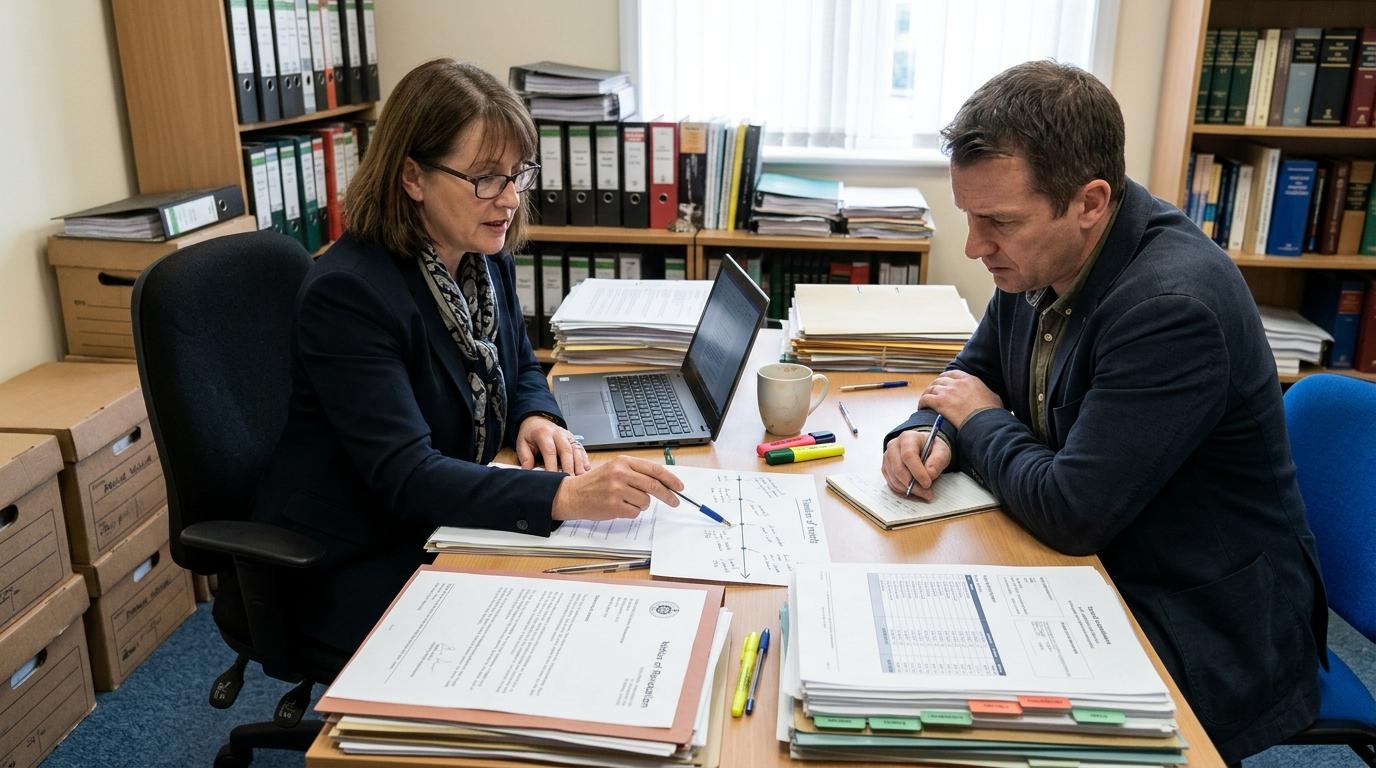
Work out exactly what has been decided. Check that the letter confirms revocation and not suspension, and note the date. The Home Office correspondence should identify which sponsor duties or revocation grounds it relies on and the evidence behind the finding. If anything is unclear, the Home Office may make further enquiries, so keep your replies accurate and consistent.
2. Preserve Your Evidence Immediately
Secure all relevant evidence before anything is lost or overwritten. This usually includes:
-
Sponsor management system records, including CoS allocation history and audit logs.
-
Payroll records and evidence of salary payments for each sponsored worker.
-
Right-to-work checks and HR files, kept as part of orderly record keeping.
-
Any compliance visit report, notes or emails with the Home Office.
-
Training records and internal compliance reports.
3. Plan for Your Sponsored Workers
Your workers will be told about the revocation by the Home Office. Speak to your existing sponsored staff early and honestly, and do not pass on any cost of the licence loss to them. Recovering the Immigration Skills Charge or sponsorship fees from a worker normally means revocation, so any such practice should stop at once.
Review your employment contracts and take advice before ending any employment, because revocation does not by itself end a worker’s employment rights. A worker may be able to join a new employer with a new visa application, so early support can help.
4. Decide Between Challenge and Rebuild
You generally have three realistic routes: correct a clear Home Office error, bring judicial review, or address the problems and make a new sponsor licence application after the cooling-off period. These are not always mutually exclusive, so take advice early. At Axis Solicitors, we often review the revocation letter and your evidence together to give you a clear view of whether a challenge has a realistic basis and how your organisation’s ability to sponsor again may be affected.
5. Do Not Miss the Deadline
Diarise the three-month judicial review limit on the day you receive the letter. Aim to send any pre-action protocol letter within days, not weeks, so that there is time to issue a claim if the Home Office does not change its mind.
How to Avoid Sponsor Licence Revocation
Prevention is far cheaper than challenging a revocation decision. Strong sponsor licence compliance rests on clear policies, trained people and regular checking.
Build Strong HR and Compliance Systems
-
Written policies: cover right-to-work checks, absence reporting, salary changes, role changes and visa expiry tracking.
-
Named compliance lead: appoint a trained Authorising Officer and Level 1 User, and keep at least one eligible Level 1 User at all times. If you have none, the Home Office will suspend your licence and give you 28 days to nominate one, and normally revokes if you fail to do so.
-
Protect your sponsor management system access: never share passwords or passcodes, and never assign a certificate to yourself or a close relative without checking the rules.
Run Regular Compliance Audits
Internal compliance audits, ideally every quarter, should test the accuracy of employee records, visa expiry dates, reporting of changes and right-to-work documents. An external mock audit by an independent adviser can show weaknesses your own team may not see.
Respond Properly to Any Compliance Concern
If the Home Office raises compliance concerns, a prompt and evidenced compliance response can change the outcome. A suspension normally carries a 20 working days window to make written representations, and a downgrade comes with its own response period. A late or thin response reduces your options.
Take Legal Advice Before Problems Escalate
Early immigration advice on policies, training and Home Office inspections is usually far less costly than dealing with a revocation. If a suspension or downgrade has already happened, advice at that stage is often the most valuable.
Can a Revoked Sponsor Licence Be Reinstated?
Reinstatement is possible in limited cases, but you should not assume it. A licence revoked in error is reinstated by the Home Office. Otherwise, a court-ordered reconsideration after judicial review, or a fresh application, are the realistic routes.
Reinstatement After a Successful Challenge
If the Home Office agrees to reconsider, or a court quashes the decision, the licence may be reinstated. In most cases it returns on a suspended basis while the Home Office decides the matter again, and it may then be reinstated with an A-rating, with a B-rating and an action plan, or revoked again.
Making a New Sponsor Licence Application
If revocation stands, you can make a new sponsor licence application once the cooling-off period has passed.
You must demonstrate you have addressed all reasons why your previous licence was revoked, and where it was revoked for dishonesty or deliberate misconduct, the Home Office will require compelling evidence that you are now suitable to hold a sponsor licence. Expiry of the cooling-off period does not guarantee a grant, and a revoked organisation should expect closer scrutiny under the sponsorship system because of the previous revocation.
The cooling-off period also applies if you surrender your licence while the Home Office was taking compliance action against you, before revocation.
Preparing During the Cooling-Off Period
-
Independent compliance audit: review record keeping, right-to-work procedures and reporting systems.
-
Corrective action: fix every issue the Home Office identified and document the fixes.
-
Training and governance: retrain HR teams, appoint suitable key personnel and set up compliance audits on a schedule.
-
Evidence file: keep a dated record showing what changed and why, as supporting evidence for a new sponsor licence application.
How Our Immigration Team Can Help After a Sponsor Licence Revocation
You can get these Axis Solicitors services if your licence has been revoked or is at risk. Our team will guide you on immigration matters as per Home Office rules.
-
UK Sponsor Licence: we review your revocation letter and evidence, advise on whether a challenge is realistic and support a new sponsor licence application once any cooling-off period ends.
-
Business Immigration: we assist employers in planning their wider immigration position, including compliance support so that your sponsorship system is ready for the future.
-
Immigration Appeals: where an individual worker has a separate refusal or cancellation decision, we advise on available challenges.
Frequently Asked Questions
What happens if my sponsor licence is revoked?
You can no longer sponsor workers, your assigned certificates become invalid and you are removed from the public register. The Home Office will normally cancel or shorten the permission of your sponsored workers.
Can I appeal a sponsor licence revocation?
No. There is no right of appeal and no administrative review. The only formal challenge is judicial review in the High Court, which must be brought promptly and within three months.
Can I keep employing sponsored workers if my licence is revoked?
Not as sponsored workers. Your workers normally have around 60 days from the date their cancellation decision is served, so take advice on your obligations and theirs before changing anyone’s employment.
How long before I can apply for a new sponsor licence?
At least 12 months from the date of the revocation notice, or at least 24 months if you have had a licence revoked more than once. You must also show you have fixed the reasons for the revocation.
Is a revoked licence the same as a suspended licence?
No. A suspension is a temporary pause while the Home Office investigates and can end in reinstatement. A revocation ends the licence in every route.
What happens to care workers if their employer’s licence is revoked?
Eligible care workers and senior care workers should not have their permission cancelled solely because of the revocation, under a temporary Home Office arrangement. It is subject to review and does not stop cancellation on other grounds.
Speak to a Solicitor About Your Revoked Sponsor Licence
If your licence has been revoked, the next step is to understand your options before the judicial review deadline and your workers’ deadlines run out.
Our UK Sponsor Licence team can review the Home Office decision, advise on whether judicial review is realistic and help you prepare a stronger sponsor licence application later. Our UK Immigration team can advise your affected workers on their own options.
We are an independent law firm and are not affiliated with UKVI or any government body. To speak to a solicitor about your case, please contact Axis Solicitors.