


Property fraud costs UK owners hundreds of thousands of pounds each year, and the methods used by property fraudsters grow more sophisticated with every transaction cycle.
Property fraud in the UK targets residential and commercial property owners through identity theft, email hacking, title fraud, and fraudulent investment schemes. Choosing a solicitor with specific experience in property fraud is crucial for handling complex cases.
Early legal advice from specialist property fraud solicitors can preserve evidence, stop fraudulent transactions, and improve your chances of recovering losses.
Whether you own a vacant flat, a buy-to-let portfolio, or a family home, understanding the risks and knowing when to instruct property fraud solicitors can be the difference between losing your property and keeping it. This guide explains how fraud happens, who is targeted, and what we at Axis Solicitors handle proeprty matters to protect our clients.
What Is Property Fraud?
Property fraud occurs when a criminal gains control of a property, mortgage funds, or sale proceeds through deception. The methods range from forging transfer documents to stealing an owner’s identity and selling property on their behalf. Fraudsters often use sophisticated methods to exploit property transactions, targeting gaps in verification processes.
HM Land Registry processed roughly 4.43 million applications to create or update titles in 2024-25. Of those, 86 were identified as fraudulent, approximately 0.0019% of all applications. That percentage sounds small, but the counter-fraud team prevented over £59 million worth of fraudulent applications in that single year. Between 2020 and 2025, more than 300 properties worth over £194 million were subject to attempted frauds that were stopped.
Property fraud can occur at any stage of property transactions: pre-contract, exchange, completion, and registration. A fraudster impersonates an overseas owner to sell a vacant London flat. Or a criminal intercepts emails during the conveyancing process and redirects completion funds to their own bank account.
The Law Society and HM Land Registry have issued joint guidance to help solicitors reduce these risks, and our internal procedures at Axis Solicitors follow that good practice.
What Are The Most Common Types Of Property Fraud?
Fraud targeting property takes several distinct forms. Understanding the types of property frauds helps you spot them before money changes hands.
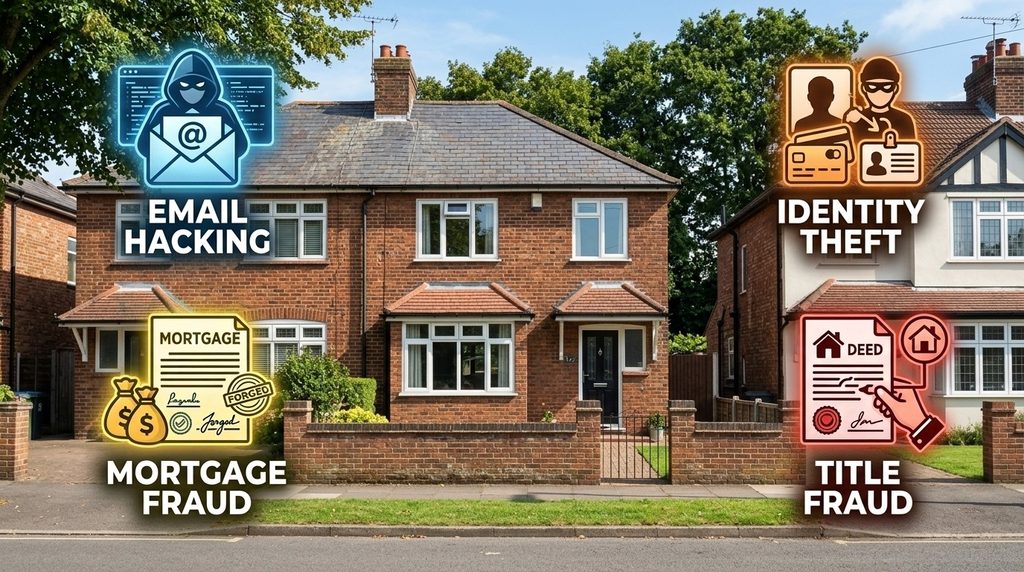
- Identity theft and impersonation: Fraudsters steal passports, driving licences, and utility bills to pose as the legitimate owner. Identity theft can lead to fraudulent property transactions where the real owner has no idea their property is being sold. In the Dreamvar case, a criminal impersonated a property owner using certified but false identity documents, resulting in a £1.1 million loss before the fraud was detected.
- Email hacking and payment diversion: Email hacking allows fraudsters to alter bank details during transactions. Criminals compromise a solicitor’s or buyer’s email account and substitute their own bank account in completion statements. The City of London Police warned of a surge in this type of fraud, sometimes called Friday afternoon fraud because completions cluster at the end of the week.
- Title fraud: Title fraud involves transferring property ownership using forged documents. A criminal submits a forged transfer to Land Registry to register themselves as the new owner. The largest single indemnity payment in 2024-25 was approximately £255,000 for a forged transfer of the whole title.
- Investment scams: Investment scams often involve properties that do not exist or are dilapidated. Non-existent off-plan developments, overpriced land, and fake rental guarantees fall into this category. Which? reported nearly £9 million lost in 2024 to rental fraud alone. Property misrepresentation solicitors handle claims arising from these schemes.
- Mortgage fraud: Mortgage fraud can involve false information on loan applications, from inflated income figures to fabricated employment records. We cover this in detail below.
- Bogus landlord scams: Criminals pose as landlords of properties they do not own, collecting deposits and rent from unsuspecting tenants.
Fraudulent investment schemes promise high returns but are often fake. If a deal sounds too good to be true, it almost certainly is.
Who Is Most At Risk Of Property Fraud In The UK?
Anyone who owns property can be targeted, but certain circumstances make some owners and properties more vulnerable.
- Empty or unoccupied properties: Properties that are empty, owned abroad, or mortgage-free are more vulnerable to fraudsters. Without a mortgage lender monitoring the title, there is one fewer layer of oversight.
- Overseas owners: A person living abroad may not notice suspicious activity, missing post, or unexpected Land Registry correspondence for weeks or months.
- Unregistered or outdated title details: Owners of unregistered land, or those who have not updated their contact address with HM Land Registry, face a growing threat because fraudsters exploit information gaps.
- Elderly or vulnerable owners: Those in long-term care or with limited capacity are at particular risk of being targeted.
- High-value properties: Buyers and sellers dealing with large deposits in the London and South East markets attract sophisticated criminal activity. Our London offices handle cases where transaction values make the rewards for fraudsters worth the effort.
If you recognise one or more of these risk factors, consider applying for a restriction on your title, reviewing the differences between your title plan and title deed, and seeking professional advice without delay.
Warning Signs You May Be Facing Property Fraud
Early recognition of warning signs can stop a fraudulent transaction before completion. Here are red flags to watch for:
- Sudden “changes” to solicitor bank details by email, especially close to completion. Always verify bank details using a published phone number, not the number in the email.
- Pressure to send funds quickly, with language suggesting the sale will collapse if you do not act immediately.
- Inconsistent contact details for supposed sellers or buyers, or documents where names and signatures do not match.
- Unexpected letters from HM Land Registry about applications on a property you own, or post related to your property that stops arriving.
- Promises of guaranteed high returns on distant property investments, or requests to sign documents without proper ID checks.
Anyone seeing these warning signs should pause the transaction and contact Axis Solicitors’ property fraud solicitors before sending money. A few hours of caution can save hundreds of thousands of pounds.
How Can A Property Fraud Solicitor Help?
Specialist property fraud solicitors combine property law, civil litigation, and regulatory knowledge to act on your behalf when fraud is suspected or confirmed.
We start with an urgent review of documents and emails, contacting the bank’s fraud team and notifying HM Land Registry to place appropriate restrictions or alerts. Reporting suspected fraud to HM Land Registry immediately can help to freeze transactions and cancel false deeds. Solicitors can pursue claims against negligent third parties in fraud cases, including the seller’s solicitor, estate agents, or companies involved in verification failures.
Victim of fraud solicitors can apply for injunctions in serious cases to freeze assets or stop completion while ownership is disputed. Recovering losses is possible even if the fraudster disappears, because claims may lie against negligent professionals or through HM Land Registry’s indemnity scheme under Schedule 8 of the Land Registration Act 2002. Access to effective legal representation for civil litigation can help recover losses from property fraud through these routes.
We give clear advice on civil litigation costs from the outset and discuss whether fees can be recovered from opponents where a claim succeeds.
Mortgage Fraud And Property Misrepresentation
Mortgage fraud in the UK ranges from organised criminal schemes, where multiple properties are purchased with fabricated identities, to disputes where false information has been supplied on a single application. Mortgage fraud can involve false information on loan applications, whether by the borrower, a broker, or a third party.
Mortgage fraud solicitors assist clients investigated by lenders, professional regulators, or law enforcement. Mortgage fraud investigations involve the Solicitors’ Regulation Authority where a legal professional is implicated. We also act for borrowers who have been misled by brokers or advisers into mortgage fraud cases they did not fully understand.
Property misrepresentation solicitors handle disputes such as undisclosed structural problems, fake rental guarantees, or concealed planning breaches that affect the property’s title or value. These matters often involve complex paper and digital trails.
Our property disputes solicitors offering expert legal support coordinate expert evidence from surveyors, forensic accountants, and digital analysts where appropriate.
If you are facing pressure from a mortgage lender, broker, or developer to sign admissions or settlement agreements, contact a solicitor immediately before responding.
Practical Steps To Protect Your Property From Fraud
Investigation and communication security are essential elements in preventing property fraud. Here is a checklist of measures for owners and buyers:
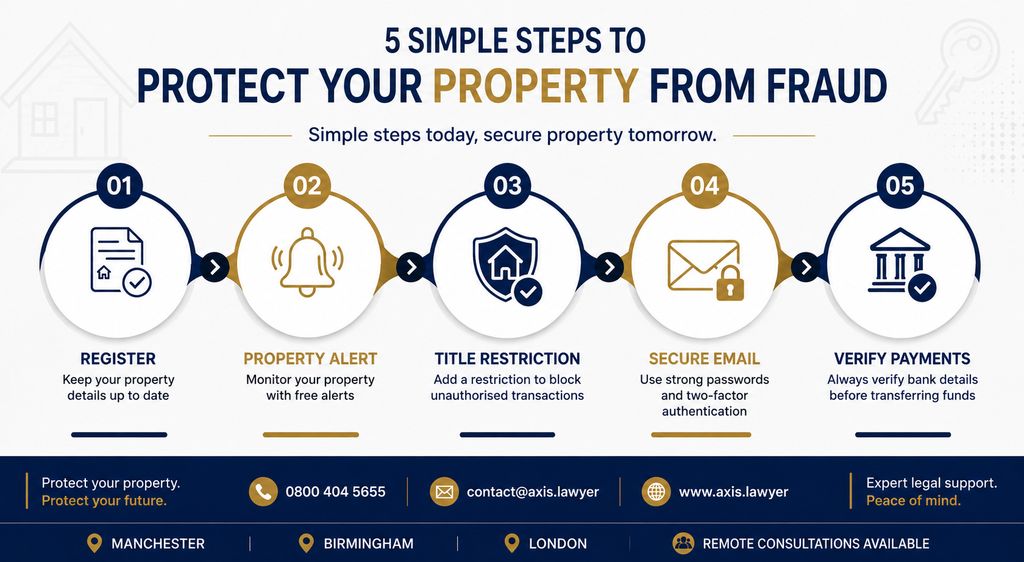
- Register your property with the Land Registry and ensure your contact address is current. Register your property with the Land Registry for protection.
- Sign up for Property Alert: This free service lets you monitor up to 10 properties with the Property Alert service. Over 798,000 accounts were active by March 2025. Sign up for the free Property Alert service to monitor activity on your title.
- Apply for a title restriction: A restriction on your title prevents unauthorised transactions. Use Form LL to require a solicitor or conveyancer to certify identity before any sale or remortgage is registered.
- Secure your email: Use strong, unique passwords, enable two-factor authentication, and avoid public Wi-Fi when handling completion funds or legal documents.
- Verify bank details: Always confirm bank details for law firms and estate agents using published phone numbers. Use Lawyer Checker to verify solicitor bank account details before transferring funds. Consider a small test transfer before sending larger sums.
These steps take minutes but can protect property worth hundreds of thousands of pounds.
What Should I Do If I Am A Victim Of Property Fraud?
Speed is critical. If you have just discovered a problem, follow these steps in order:
- Contact your bank’s fraud team to attempt to freeze or recall any transferred funds.
- Alert HM Land Registry by calling the Property Fraud Line at 0300 006 7030. Inform the Land Registry if funds were transferred fraudulently.
- Report to Action Fraud (or the National Crime Agency for organised business crime) and obtain a crime reference number.
- Notify all professionals involved in any ongoing transaction, including your solicitor, the seller, and any estate agents or mortgage lender.
- Instruct property fraud solicitors as early as possible. Early instructions help secure evidence, communicate with insurers and lenders, and consider court applications.
Victims should retain all evidence including emails and documents to support their claims. Time limits apply to certain civil claims; in England and Wales, the standard limitation period is six years for contract or tort, though fraud cases may have different starting points. Keep every email, letter, and bank record.
Axis Solicitors’ Experience In Property Fraud Cases
Axis Solicitors is a UK-wide law firm regulated by the Solicitors Regulation Authority (SRA No: 653526). As expert solicitors in the UK with more than 20 years’ experience and over 8,000 cases handled across practice areas, we have a proven track record in contentious property matters. Over 100 investors were represented in a property fraud case we handled, dealing with complex multi-party claims across jurisdictions.
Our presence in Manchester, Birmingham, and London offices gives clients convenient access regardless of where the property is located. We handle disputes over fraudulent transfers, misrepresentation in sales, professional negligence linked to property frauds, and claims on behalf of victims who have lost funds through failing due diligence by other firms or companies.
Our commitment to excellent service means clear communication, regular updates, transparent costs information, and practical strategies aimed at the best possible outcome for each client.
Costs, Funding And Working With Axis Solicitors
We understand that concerns about legal costs add to the stress of dealing with fraud. We discuss fees openly at the outset of every case.
- Billing models: We offer hourly rates, fixed-fee initial consultations, and staged work plans tailored to the complexity of each matter.
- Cost recovery: In some fraud cases, it may be possible to seek recovery of legal costs from opponents if a claim succeeds, although this is never guaranteed.
- Insurance and funding: We review any existing legal expenses insurance or other funding options a client may have through home or landlord insurance policies. Legal aid may be available for mortgage fraud cases under certain conditions.
- No surprises: We keep clients informed about costs throughout the case and avoid unexpected charges. You will know your position before committing to each stage.
Act quickly and book a consultation with Axis Solicitors today. Whether you are aware of suspicious activity, have already lost funds, or simply want to protect property you own, our team is committed to helping you reach the best possible outcome.
FAQs About Property Fraud And Legal Help
Can I Recover Property Lost Through Fraud?
Recovery depends on how the fraud was carried out, whether the property has been sold on to an innocent buyer, and how quickly you reported the problem. Victims of property fraud can pursue compensation claims through HM Land Registry’s indemnity scheme, which paid out £398,964 across four fraud and forgery claims in 2024-25. Civil claims against fraudsters or negligent professionals are also possible. A detailed case assessment by experienced property fraud solicitors is needed to give realistic prospects of recovery.
How Do I Report Property Fraud In The UK?
Report suspected property fraud to Action Fraud, the police, and HM Land Registry. Where money has moved, notify the relevant banks immediately. Reporting through official channels generates reference numbers that support civil claims and insurance processes. Instructing solicitors early ensures all key agencies receive clear, consistent information supported by documents.
How Long Do Property Fraud Cases Usually Take?
Timescales vary: urgent injunctions can be sought within days, but full civil proceedings or indemnity claims may take many months. In the Paul Jones case, the buyer lost approximately £400,000 and had no resolution after 17 months. Delays can arise from evidential complexity, court listing pressures, and the need to trace assets. We provide an estimated timeline after reviewing the facts and keep clients updated throughout.
Do I Always Need To Go To Court To Resolve Property Fraud?
Not all cases require a full trial. Some can be resolved through negotiation, alternative dispute resolution, or agreement with HM Land Registry. Court proceedings may be necessary where ownership is disputed or urgent orders are needed to prevent further loss. We recommend the most proportionate and cost-effective route based on the client’s priorities.
How Can I Check That My Solicitor Is Properly Regulated?
Confirm that any firm you instruct is authorised by the Solicitors Regulation Authority and appears on the Law Society’s Find a Solicitor search. Verify the firm’s SRA number, office addresses, and contact information against their own website. Axis Solicitors is SRA-authorised (SRA No: 653526).
Verified solicitors can help victims by securing title restrictions to prevent unauthorized sales or mortgages; only a regulated firm can do this properly.