

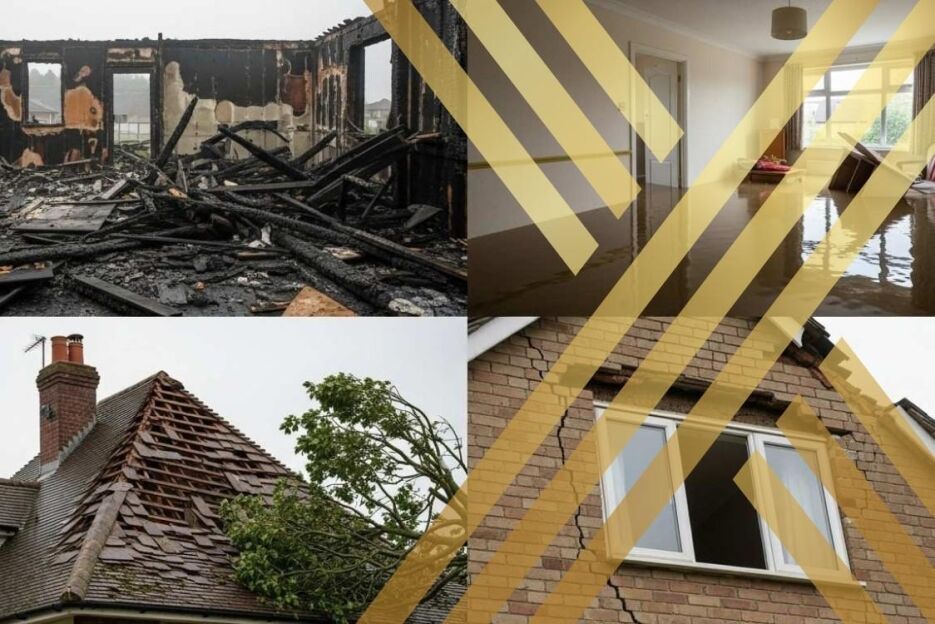
Property damage can strike without warning—whether it’s a fire tearing through your home, flooding from a burst pipe, storm damage to your roof, or deliberate harm caused by a tenant. These situations are stressful, costly, and often lead to complex disputes with insurers, landlords, neighbours, or contractors. Understanding your legal rights and the claims process is essential to protect your property and secure the compensation you deserve.
These claims typically arise from negligence, defective work, or breach of contract, affecting everything from owner-occupied homes to rental properties, business premises, and energy-related claims involving utility infrastructure.
This article explains the most common types of property damage claims in the UK, how the claims process works, and when you should consider instructing a solicitor.
What Is Property Damage in UK Law?
In UK law, property damage refers to physical loss or harm caused to buildings, fixtures, or contents. This includes obvious visible damage such as burnt walls, smashed windows, or collapsed ceilings, as well as hidden issues like structural movement, rising damp, or rot within timber frames.
Property damage claims generally fall into two categories.
- First party claims involve policyholders claiming against their own insurance for losses covered under their policy.
- Third party claims arise when you seek compensation from another person or business whose actions—or failures—caused the damage to your property.
The main legal bases for these claims include negligence (where someone fails to take reasonable care), nuisance (unreasonable interference with your use of property), breach of contract (failure to meet agreed obligations), product liability (defective goods causing harm), clinical negligence, and landlord–tenant obligations under tenancy agreements or housing law.
These claims are typically complex and require consideration of many different areas of law, including professional negligence, construction, product liability, clinical negligence, and matters of jurisdiction.
These claims can relate to houses, flats, commercial units, warehouses, and mixed-use buildings—not just owner-occupied homes. Whether you’re a homeowner, tenant, landlord, or business owner, understanding your rights is essential when damage occurs.
1. Fire and Smoke Damage Claims
Fires in homes and business premises represent some of the most devastating forms of property damage, often destroying both the structure and its contents. The aftermath typically involves complex insurance claims, disputes over responsibility, and significant repair costs.
Common causes of fire-related damage include electrical faults, faulty appliances, negligent work by contractors, arson, and accidental fires from cooking or unattended cigarettes. In many circumstances, identifying the origin of the fire becomes central to determining who should pay for the losses.
Key issues in fire property damage claims include proving how the fire started, establishing responsibility (whether that lies with a landlord, tenant, contractor, or manufacturer), and checking whether any insurance exclusions apply. For example, some policies exclude fires caused by unoccupied properties or specific maintenance failures.
A 2023 Manchester flat fire caused by faulty wiring installed by a contractor illustrates these complexities. The affected residents pursued a claim against the contractor’s insurers, requiring expert fire investigation reports to prove the wiring was defective and that the contractor had breached their duty of care.
Smoke damage can also affect areas untouched by flames, leading to disputes over the scope and cost of reinstatement works. Soot can penetrate soft furnishings, electrical systems, and wall cavities, making full remediation expensive.
2. Escape of Water, Flooding and Damp-Related Damage
Escape of water and flooding are among the most common property damage claims handled by insurers across the UK, accounting for approximately 23% of homeowners’ claims according to industry analyses.
It’s important to differentiate between escape of water—such as burst pipes, leaking boilers, or failed appliances like washing machines—and flooding from external sources like rivers, surface water, or blocked drains. Insurance policies typically treat these differently, with many standard home policies excluding flood damage from natural events.
Typical disputes in water-related property damage claims include insurers refusing cover due to alleged lack of maintenance, arguments over whether damp was pre-existing, and disagreements about the cost of repairs and drying out. Remediation costs can range from £5,000 to £20,000 depending on the extent of damage caused.
Consider two examples from recent years. A 2022 leaking roof in a terraced house in Manchester caused a ceiling collapse, with the insurer initially arguing the damage resulted from gradual deterioration rather than a sudden event. In a separate 2021 case, a ground-floor flat was severely affected by an upstairs neighbour’s overflowing bath, leading to a third party claim against the negligent neighbour.
Water-related damage has long-term consequences if remedial works are delayed. Mould growth, timber rot, and structural deterioration can develop within weeks, significantly increasing repair costs and creating health risks.
3. Storm, Subsidence and Structural Property Damage
Extreme weather and ground movement can cause serious—sometimes very high value—property damage claims. These events often lead to lengthy disputes with insurers over coverage and responsibility.
Storm damage typically involves high winds damaging roofs, falling trees impacting buildings, and storm-driven rain penetrating walls and windows. The UK has experienced increasingly severe storms in recent years, with events like Storm Eunice in 2022 causing approximately £1.7 billion in insured losses across Europe.
Subsidence and heave present different challenges. Ground movement causes cracks in walls, sloping floors, and structural instability, often linked to tree roots, clay soils, or poor foundations. These issues develop gradually but can result in substantial claim value when structural repairs become necessary.
A practical example from 2020 involved a semi-detached house near Greater Manchester suffering subsidence allegedly linked to a water main leak. The homeowner faced a complex dispute with the water utility over responsibility, requiring engineering evidence to prove causation.
Typical insurer arguments in structural property damage cases include claims that damage results from wear and tear rather than an insured risk, assertions of historic movement, or suggestions of insufficient maintenance by the property owner. These factual issues often require expert determination.
Successful resolution of these claims depends on specialist surveyors and structural engineers. Axis Solicitors plays a key role in coordinating expert evidence and managing complex structural claims, ensuring your case is presented robustly.
4. Landlord and Tenant Property Damage Claims
Many property damage disputes arise within rental relationships, affecting both landlords and tenants across the private and social housing sectors. Insurance typically covers malicious damage caused by tenants, but reasonable wear and tear is not covered by insurance claims.
Landlords must differentiate between malicious or negligent damage by tenants—such as broken doors, holes in walls, or water damage from misuse—and normal wear and tear that cannot usually form the basis of a claim for property damage. Courts and deposit schemes draw clear distinctions between these categories and favour the well-defined tenant rights.
Landlords may claim under landlord insurance for serious damage, as well as pursuing tenants directly for breaches of tenancy agreements where appropriate. Subrogated recoveries, where insurers pursue tenants after paying out claims, are also common in significant damage cases. It is important for landlords to document tenant damage thoroughly to support their insurance claims. Claims can be rejected due to insufficient evidence of tenant-caused damage.
Consider these examples from recent years. A 6-month AST in 2023 ended with a tenant having caused severe damage by removing fixtures and leaving the property in disrepair, leading to deposit disputes and civil court proceedings. Meanwhile, a 2022 student let in Manchester involved ongoing mould disputes between landlord and tenants, with disagreements over whether the landlord’s failure to deal with ventilation caused the problem.
During the claims process, landlords should ensure their insurer is notified promptly about any damage to facilitate the claims process. Pest infestations caused by tenant negligence may be grounds for an insurance claim. Landlords can maximize their chances of a successful claim by providing substantial evidence.
Tenants also face property damage issues, including claiming for personal belongings damaged by leaks or fires, or challenging unlawful deposit deductions where landlords allege claims that do not exist or constitute fair wear and tear.
5. Business Premises and Commercial Property Damage

Property damage to shops, offices, warehouses, and hospitality venues can interrupt trading and lead to significant financial loss beyond the immediate repair costs.
Common scenarios include fire in a restaurant kitchen, water damage to stock in a retail unit, impact damage from vehicles colliding with premises, car accidents or impacts involving vehicles, and structural damage during neighbouring building works. These events often affect businesses’ ability to operate, creating urgent pressure to resolve claims quickly.
The link between property damage and business interruption is critical for commercial clients. Disputes frequently arise over policy wording, indemnity periods, and how to calculate loss of profit. Insurers may argue about whether specific losses are covered or question the period for which trading was genuinely affected. Weightmans deals with claims arising from a full suite of policy types, including commercial combined cover to CAR, international to SME.
Commercial leases often allocate responsibility for repairs, service charges, and insurance between landlord and tenant, leading to further disputes after serious damage. Understanding your lease obligations is essential when damage occurs.
A 2021 Manchester city centre shop was forced to close after a neighbouring contractor caused structural damage during refurbishment works. The affected business pursued claims against both the contractor and their liability insurers, requiring detailed evidence of trading losses and repair costs.
6. Defective Work, Construction Issues and Product-Related Damage Claims
Building defects and faulty products frequently result in significant property damage and complex multi-party disputes that can take years to resolve.
Defective construction work includes poor roofing, inadequate waterproofing, faulty plumbing or electrics, and non-compliant cladding leading to leaks, fire risk, or structural failures. These issues may not become apparent until months or years after the work was completed.
Product-related property damage occurs when appliances, boilers, or building materials fail, causing fire, water leaks, or widespread deterioration. Manufacturers, suppliers, and installers may all bear potential liability depending on the nature of the defect.
Faulty cladding or defective cavity wall insulation in a block of flats illustrates the scale these issues can reach, often leading to long-running property damage disputes and serious safety concerns affecting multiple households. Local authorities may become involved where buildings pose risks to occupants.
These cases frequently involve multiple parties—developers, contractors, insurers, managing agents—alongside complex limitation periods and contractual issues. Identifying who is responsible and proving the breach requires careful legal analysis. Claims can be complex and may involve investigations by insurers, often requiring the services of a loss adjuster.
7. Third Party Property Damage and Public Liability Claims
Third party property damage occurs when someone’s negligent act or omission damages another person’s property, often involving public liability insurance.
Everyday examples include a contractor breaking a client’s windows during building work, a delivery vehicle hitting a boundary wall, or a tradesperson causing water damage in a neighbouring flat. These incidents happen frequently and can lead to substantial claims. Accidental damage accounts for 26.26% of insurance claims due to human error, while burglary and vandalism represent roughly 15% of claims, often involving forced entry through vulnerable points.
The typical process will begin when the incident occurs and the affected party gives notification to their insurer or directly to the person responsible. An investigation by a loss adjuster follows, often including a site visit for assessment, with subsequent negotiations over liability and quantum (the amount payable).
Individuals and businesses may receive letters of claim from solicitors alleging negligence and demanding compensation for damage. Claims may also involve injury to members of the public or visitors, which require careful reporting and investigation. Receiving such a letter can be alarming, but early legal advice helps you respond appropriately and protect your interests.
Time limits apply to most of the claims—generally six years for claims in contract or negligence in England and Wales. Jurisdiction rules mean that early legal advice is important to protect your position before limitation periods expire.
Insurance Claims for Property Damage
Insurance claims for property damage are a crucial lifeline for property owners and tenants facing unexpected losses to their personal property. Whether the damage is caused by fire, flooding, or the negligence of a third party, understanding how to submit and argue an insurance claim is essential for a successful outcome. These claims typically require the claimant to provide detailed evidence of the damage, including the cause, extent, and value, to ensure the insurance company processes the claim efficiently.
For example, if a tenant accidentally causes a fire in a rental property, the landlord may need to submit an insurance claim for the resulting damage. In such cases, it is vital to prove that the damage was not due to normal wear and tear, but rather the result of a specific incident or negligence. This often involves gathering photographs, repair estimates, and expert reports to support the claim. The law requires claimants to demonstrate that the damage falls within the terms of their insurance policy and that any exclusions do not apply.
Insurance claims for property damage can become complex when multiple parties are involved, such as when a contractor’s faulty work leads to flooding in a building. In these situations, solicitors may be needed to help navigate the legal aspects of the claim, ensuring that the responsible party is held accountable and that the claimant receives fair compensation. It is also important to review the insurance policy carefully, as different policies may have varying requirements and coverage limits.
Preventing Property Damage
Whether the risk comes from party damage, negligence, or unforeseen events, taking proactive steps can significantly reduce the likelihood of costly claims and disruptive repairs.
- The first step in prevention is to identify potential risks specific to your property and circumstances. For example, regular inspections can help spot early signs of wear, water leaks, or structural issues before they escalate into major damage.
- Businesses should ensure that all safety protocols are followed, and that staff are trained to recognise hazards that could lead to property damage and bodily injury or trigger insurance claims.
- Maintaining your property is crucial—this includes servicing boilers, checking electrical systems, clearing gutters, and repairing minor faults promptly.
- For landlords and tenants, clear communication about responsibilities and prompt reporting of issues can prevent small problems from becoming grounds for party disputes.
- It’s also important to review your insurance coverage regularly to ensure it matches the current value and nature of your property. Adequate insurance protects you if damage does occur, but prevention remains the most cost-effective strategy.
By taking these essential steps to identify and address risks, property owners and businesses can minimize the impact of negligence, adverse circumstances, and third-party actions. Proactive prevention not only protects your property but also gives you confidence that you are prepared for whatever events may arise.
How Property Damage Claims Are Investigated and Valued
Successful claims depend on clear evidence of cause, responsibility, and the true cost of repairs or replacement. Understanding how claims are investigated helps you prepare effectively.
Key evidence types include:
| Evidence Type | Purpose |
| Photographs and videos | Document the extent of damage immediately after the event |
| Repair invoices and quotes | Establish the cost of remediation |
| Surveyor reports | Provide professional assessment of damage scope |
| Expert engineering or fire reports | Prove causation in complex cases |
| Witness statements | Support your account of events |
| Correspondence with insurers | Create a paper trail of communications |
Keep detailed records of all interactions with insurers, adjusters, and contractors throughout the claims process. In 2026, filing a property damage claim involves a structured multi-stage process focused on rapid notification and detailed digital documentation. Take reasonable steps to prevent further damage to the property but do not commence permanent repairs until insurers approve them.
The difference between reinstatement (repairing or rebuilding the property to its previous condition) and indemnity (accounting for age and condition) affects how payouts are calculated. Policy terms determine which approach applies, so reviewing your insurance wording is essential.
Loss adjusters and opposing experts may dispute the scope of works, access costs, betterment (where repairs improve the property beyond its pre-damage state), and whether proposed repairs are reasonable. These challenges can significantly reduce the amount you receive. Costs should be confirmed with the insurer’s loss adjuster before proceeding with reinstatement work.
In one case, an insurer under-valued a water damage claim, offering far less than the true repair cost. A detailed independent surveyor’s report helped the claimant prove the full extent of damage and achieve a substantially higher settlement.
Navigating the Property Damage Claims Process
When damage occurs, it is essential to notify your insurer immediately and provide thorough documentation, including photographs, videos, and witness statements, to support your property damage claim. This early evidence is crucial for establishing the cause and extent of the damage and can help prevent property disputes later in the process.
Once a claim is submitted, insurers typically appoint a loss adjuster to assess the damage and determine the appropriate claim value. The loss adjuster’s role is to investigate the circumstances, review the evidence, and recommend a settlement based on the policy terms. It is important for claimants to keep detailed records of all correspondence with the insurer, including letters, emails, and phone calls, as this can help resolve any factual issues or disagreements that may arise.
Understanding the type of insurance policy you hold is also essential. For example, commercial combined policies, Contractors’ All Risks (CAR) policies, and domestic property insurance each have specific terms, conditions, and exclusions that can affect the outcome of your claim. Being familiar with these details allows you to argue your case more effectively and avoid unexpected setbacks.
In some cases, the insurer may seek subrogated recoveries, pursuing a third party who is responsible for the damage to recover the cost of the claim. This process can be complex and may involve legal proceedings, but it can also help reduce the overall cost to the claimant and ensure that the party at fault is held accountable.
Seeking professional advice from solicitors or other experts is often essential, especially for complex or high-value property damage claims. Their expertise can help you manage the process, address any legal or technical challenges, and maximise your chances of a successful outcome.
When to Instruct a Property Damage Lawyer
Not every small incident needs legal help, but many claims benefit from early specialist advice. Knowing when to contact a solicitor can make a significant difference to your outcome.
Key trigger points for seeking legal support include: your claim refused or underpaid by your insurer, liability disputed by a neighbour or contractor, high repair costs that make the stakes significant, or safety issues in a residential block that require urgent attention. For complex claims, hiring an Independent Loss Assessor may help negotiate with the insurance company.
Civil litigation solicitors can assist by negotiating with insurers on your behalf, managing pre-action protocol steps required before court proceedings, representing clients in mediation or arbitration, and issuing court proceedings where needed. Legal expertise helps you argue your case effectively and navigate complex procedural requirements.
Funding options vary depending on your circumstances. Some clients may have legal expenses insurance covering property disputes, while others arrange private funding. We can discuss available options during your initial assessment.
You should contact Axis Solicitors if you’re dealing with: a serious fire affecting your home or business, a major leak causing ongoing damage, structural damage from subsidence or construction defects, a disputed insurance claim where the insurer won’t pay fairly, or a negligent party who refuses to accept responsibility. We pride ourselves on responsive service and clear communication throughout your case. Learn more about how a civil litigation solicitor in Birmingham can help you through disputes in our detailed guide.
Get Expert Assistance for Your Property Damage Claim
Axis Solicitors is a UK law firm with extensive experience in civil litigation, housing disputes, and property matters, handling both individual and business property damage cases. We combine legal expertise with practical understanding of how insurance claims and court processes work.
Our related services in landlord–tenant disputes, housing disrepair, and wider civil litigation also overlap with property issues, allowing us to take a comprehensive approach to your legal needs. If you’re dealing with any damage to your property, discuss your situation with our team.
Contact Axis Solicitors today for advice on your property damage claim. We respond quickly to urgent situations and can arrange support through our offices in Manchester, London, and Birmingham.

